Protecting critical infrastructure is no longer just about preventing cyberattacks, but also about ensuring that essential services remain operational when incidents occur. The role of blockchain and artificial intelligence in managing these risks was among the topics presented by the National Institute for Research and Development in Informatics – ICI Bucharest at the international CIPRE Europe 2026 conference, held from 20 to 22 October in Brussels, Belgium.
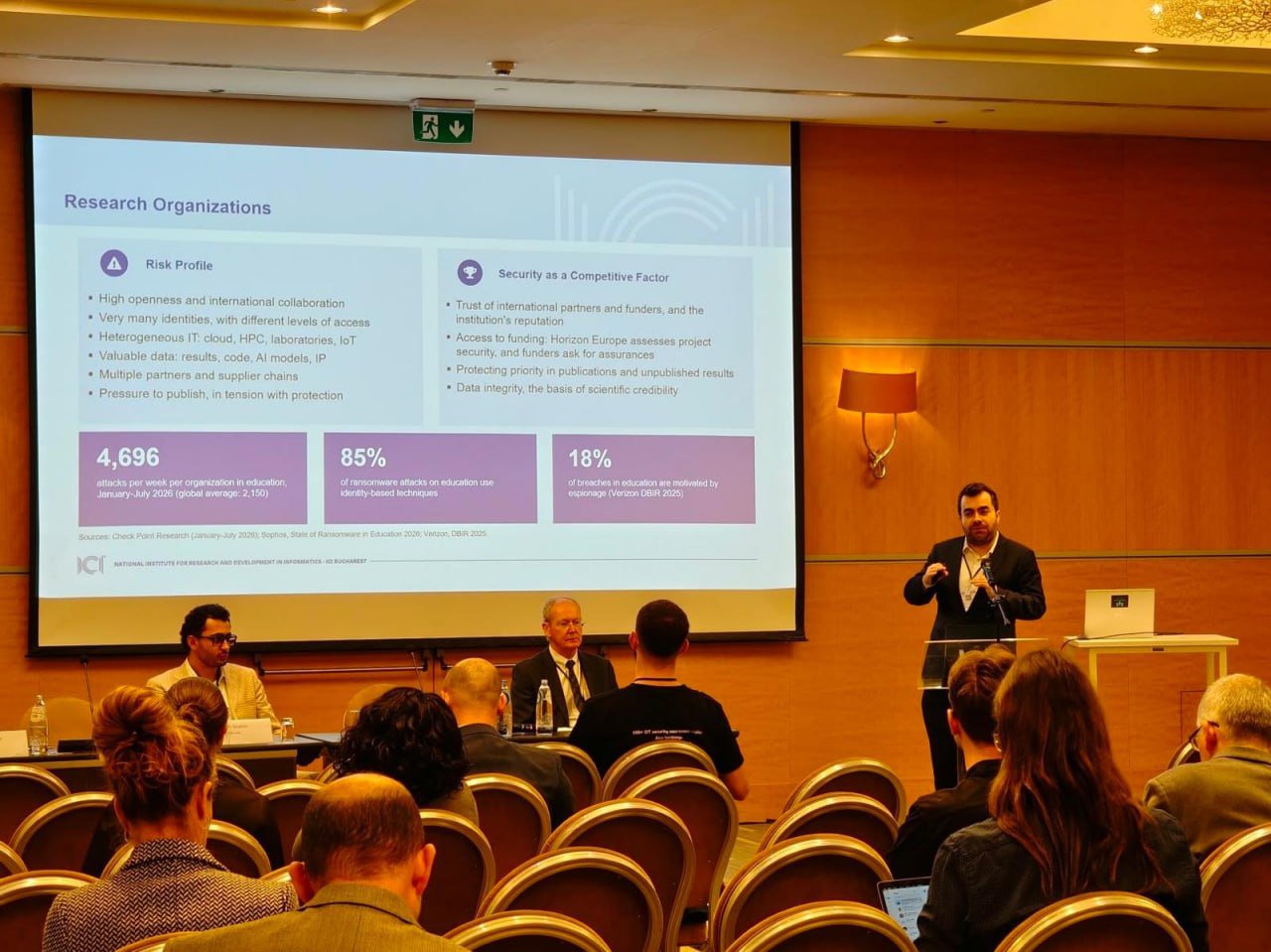
ICI Bucharest participated in two conference panels addressing current challenges in the cybersecurity and cyber resilience of critical infrastructure. During the “Cybersecurity and Cyber Resilience Sector Symposium” panel, the institute's representative discussed the role of blockchain technologies in strengthening cyber resilience. The presentation covered data integrity, information traceability, and the use of distributed technologies in systems where security and operational continuity are essential.
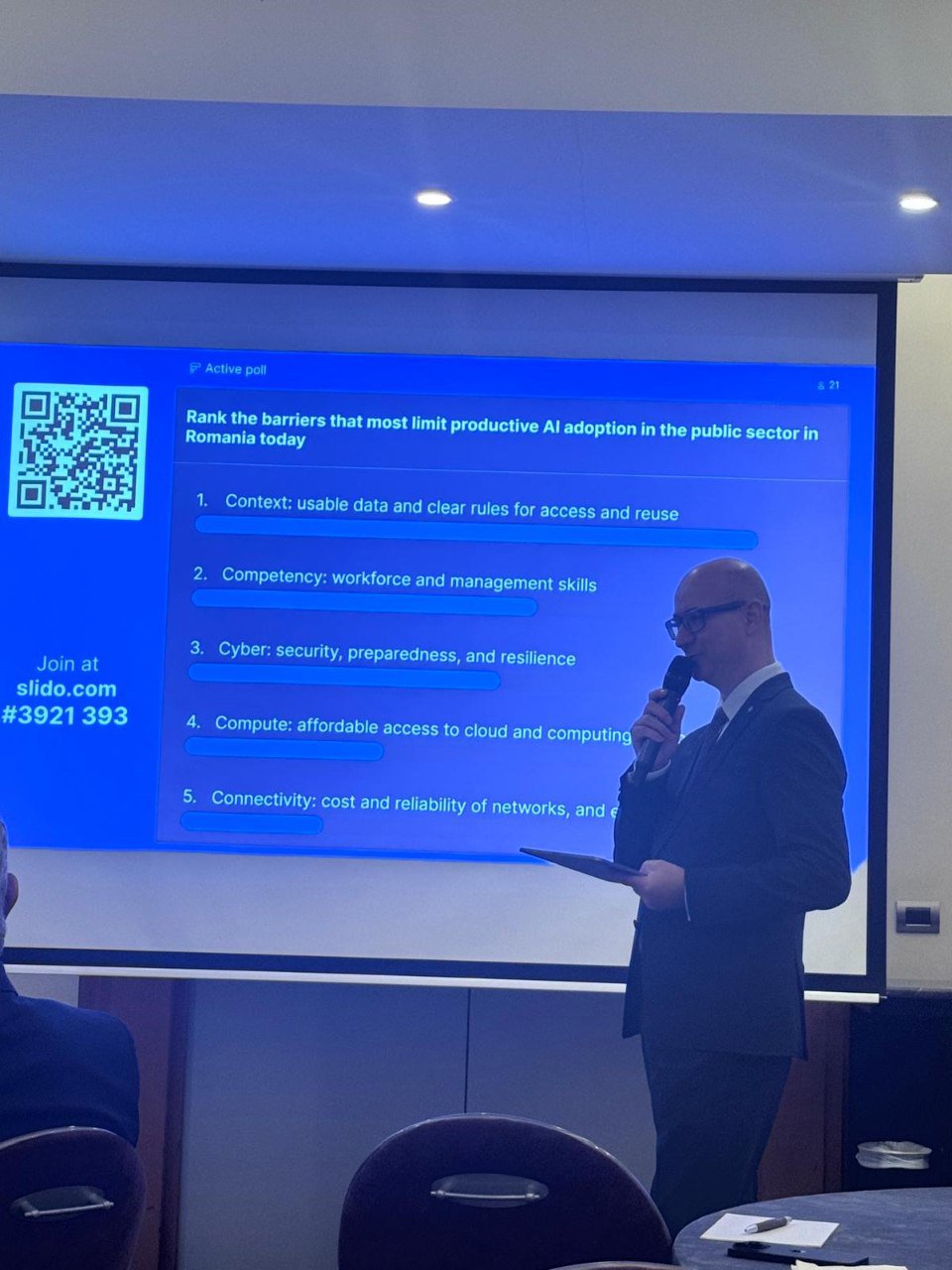
The second presentation took place during the “AI and Cyber in CI” panel and focused on applications of artificial intelligence in critical infrastructure protection. Discussions explored how AI can be used to identify threats, analyse risks, and support responses to cybersecurity incidents.
Participation in the conference also provided an opportunity to promote ICI Bucharest's research activities under the Nucleu RoDID project, as well as the CYRESRANGE and “Cyber Polygon: A Cyber Range Platform Specialized on Energy Sector with Automatic Generation of Virtual Scenarios” projects. These activities reflect the institute's work in digital identity, distributed technologies, cybersecurity, and the development of simulation and testing environments for cyberattack scenarios.
Organised by the International Association of Critical Infrastructure Protection Professionals (IACIPP), CIPRE Europe brings together experts from research, industry, and public institutions to discuss the physical and cyber protection of critical infrastructure. This year's edition gave participants the opportunity to exchange experiences and examine solutions and approaches used in the field.