Cyber threats are evolving rapidly, and identifying risks and developing effective responses require technical expertise and up-to-date information. One challenge of international cooperation is integrating research findings into policymaking and negotiating cybersecurity agreements. In this context, ICI Bucharest participated in the Africa Cyber Security Forum 2026, held in Morocco from 12 to 14 October.
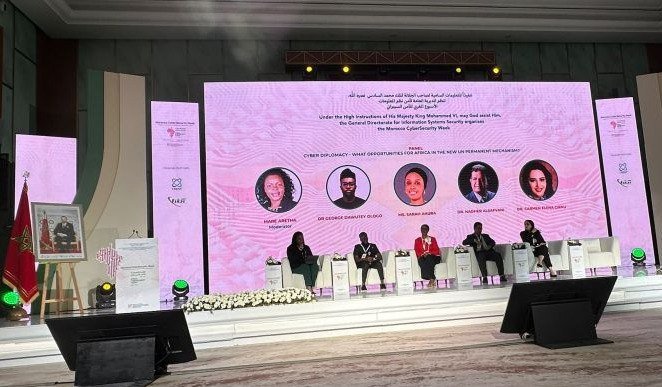
The institute was represented on the panel “Cyber Diplomacy – What Opportunities for Africa in the New UN Permanent Mechanism?”, which focused on the opportunities the new UN permanent mechanism offers African countries for security in the use of information and communications technologies.
In its contribution, ICI Bucharest highlighted the importance of ongoing cooperation among research institutes, cybersecurity authorities, government institutions, and diplomatic missions. Involving specialists from the early stages of negotiation preparation can help ensure decisions are informed by technical data and analysis while supporting early identification of emerging threats.
ICI Bucharest also proposed developing an African network for expertise and foresight analysis in cyber diplomacy, aimed at facilitating knowledge exchange, risk assessment, and evidence-based recommendations. Key areas of interest include artificial intelligence, ransomware attacks, the security of submarine cables and connected devices.
Organised by Morocco’s Direction Générale de la Sécurité des Systèmes d'Information (DGSSI) and Smart Africa, the panel brought together experts from several countries to discuss international cooperation and African states' participation in shaping global cybersecurity norms.